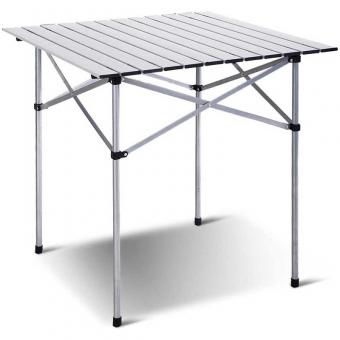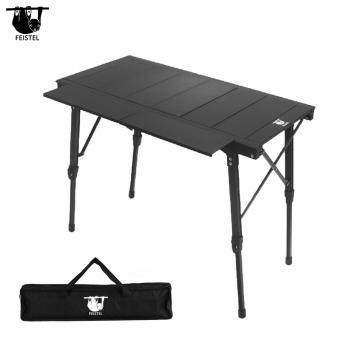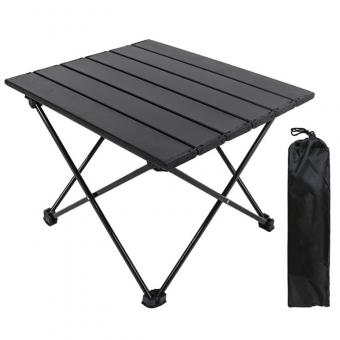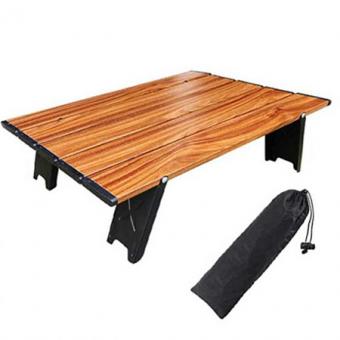
Marke : ANHUI FEISTEL FACTORY Zugehörige Fertigung : OEM und ODM Produkt : Ein leichter, kleiner, faltbarer Picknicktisch, perfekt für Outdoor-Aktivitäten. Es besteht aus langlebigen Materialien, ist tragbar und einfach einzurichten.
neil Willkommen auf unserer Website !
erfahren Sie mehr
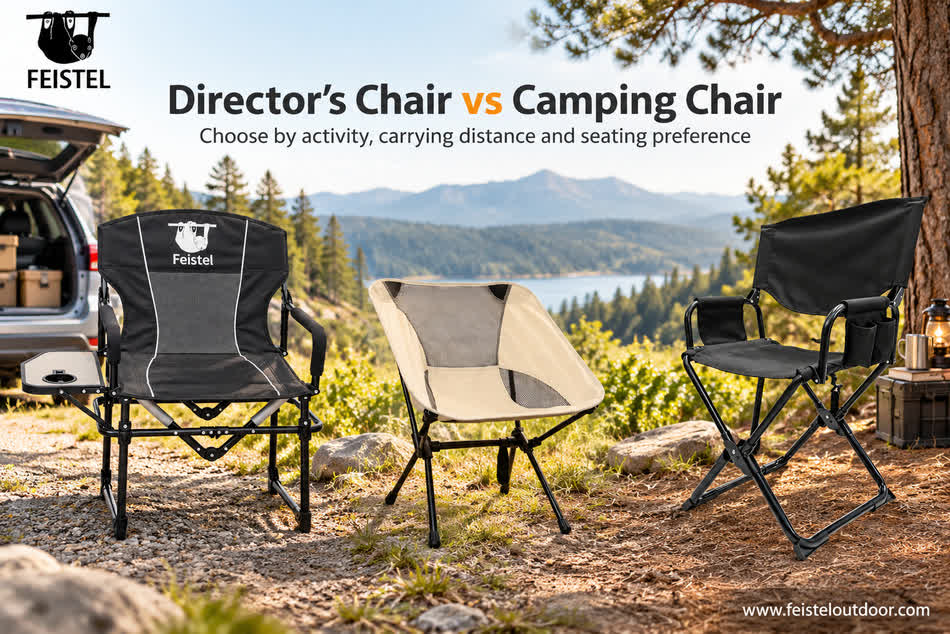
At FEISTEL, we recommend choosing between a director’s chair and a regular camping chair by starting with the activity rather than the label on the product. A director’s chair is a particular folding-seat design and can itself belong to the camping-chair category. By a regular camping chair, we mean common quad-style, sling-style, pole-frame, low-back or high-back portable seating. This distinction matters because the products overlap: both can be used outdoors, and both can include folding frames, armrests and accessories.
Our short verdict is conditional. An upright folding director chair with an attached side table can be especially practical for fishing, car camping, market stalls and long stationary activities. A compact camping chair usually deserves priority when the user must walk a long distance with gear. A padded high-back model may be more comfortable for lounging than either basic alternative. We do not make a universal claim that one type is stronger, safer or more ergonomic in every setting.
Throughout this guide, we distinguish three kinds of information: observable engineering principles, manufacturer-published specifications, and performance claims that require a documented test. Where we discuss sample loads, comfort responses or test plans, we will not present them as experiments already completed by FEISTEL unless verifiable records exist. This makes the article more useful both to outdoor shoppers and to buyers planning wholesale or OEM/ODM projects.
A director’s chair usually has an upright seat, a separate back panel, armrests and a folding frame with crossing or braced supports. Versions designed for outdoor recreation may use steel or aluminum frames, woven seat fabric, storage pouches or side tables. It is not necessary for every director’s chair to be especially tall, and the presence of a side table is a feature rather than a universal definition. Our recommendation is to verify the actual mechanism and dimensions of the chair being sold.
Our FEISTEL catalog contains a steel-frame director-style folding chair with an attached side table, 600D Oxford seat, storage pouch and published 45 cm seat height. It also contains another director-style configuration with hard armrests and a 600D polyester-and-mesh cover. These two products already illustrate that “director’s chair” is a design family rather than one fixed bill of materials.
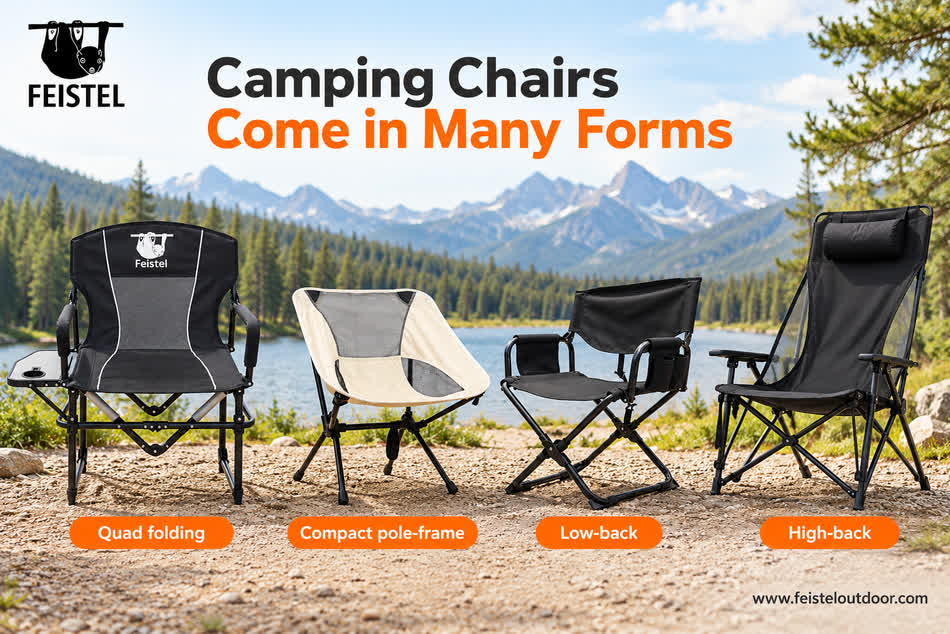
We use regular camping chair as a practical category term rather than a technical standard. It can refer to a folding quad chair with soft arms, a low-back seat, a lightweight tube-and-fabric assembly, a padded chair or a high-back lounger. These designs do not share one standard height, weight, packed shape or seat tension. When comparing them with a director’s chair, the reader should specify which alternative is actually under consideration.
Our catalog provides examples of genuinely different priorities. One published compact model weighs 0.56 kg and uses a 7001 aluminum frame and 420D nylon seat. A high-back extra-wide moon chair instead uses a more enveloping seat shape, 7075 aluminum construction and a polyester-mesh cover. Neither should be incorrectly described as a director’s chair just because it has a high back or a comparatively strong frame.
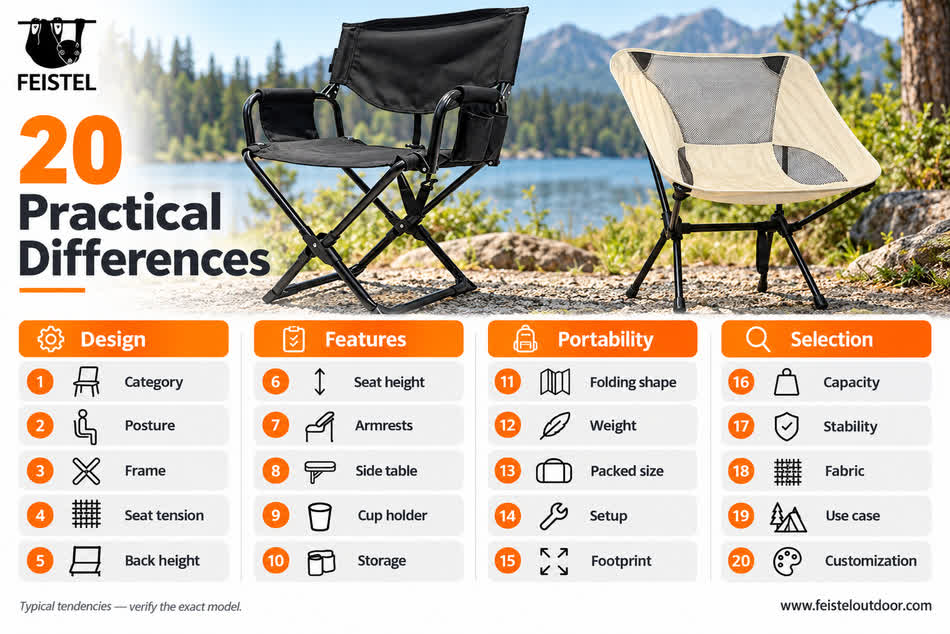
Before diving into detailed explanations, we compare twenty practical variables. The table describes common tendencies, not universal rules. For technical purchasing, the exact model page and approved sample always take precedence over a category description.
|
Comparison dimension |
Director’s chair |
Regular camping chair |
|
Category relationship |
Specific chair construction |
Broad portable-chair category |
|
Typical posture |
Upright, task-oriented |
Upright or relaxed |
|
Frame |
Often crossed or braced |
Quad, pole or other |
|
Seat tension |
Often defined/tensioned |
Highly variable |
|
Back height |
Often separate upright panel |
Low to high back |
|
Seat height |
Standard or tall styles |
Low, medium or high |
|
Armrests |
Often firm |
Soft, rigid or absent |
|
Side table |
Available on many models |
Optional on selected models |
|
Cup holder |
May be part of table |
Common on quad styles |
|
Storage pouch |
Often included |
Varies |
|
Folding shape |
Often broad and flat |
Bag or pole bundle |
|
Carried weight |
Model-dependent |
Very broad range |
|
Packed dimensions |
Often broad profile |
Often narrow bundle |
|
Load capacity |
Specific rating only |
Specific rating only |
|
Stability |
Depends on support footprint |
Depends on support footprint |
|
Fabric |
Oxford or polyester mesh |
Many fabric types |
|
Set-up |
Usually unfold |
Unfold or assemble |
|
Typical fishing use |
Fixed-location convenience |
Portable alternatives |
|
Markets and events |
Upright work convenience |
General leisure seating |
|
OEM customization |
Side tables, arms, fabric |
Frames, seats, materials |
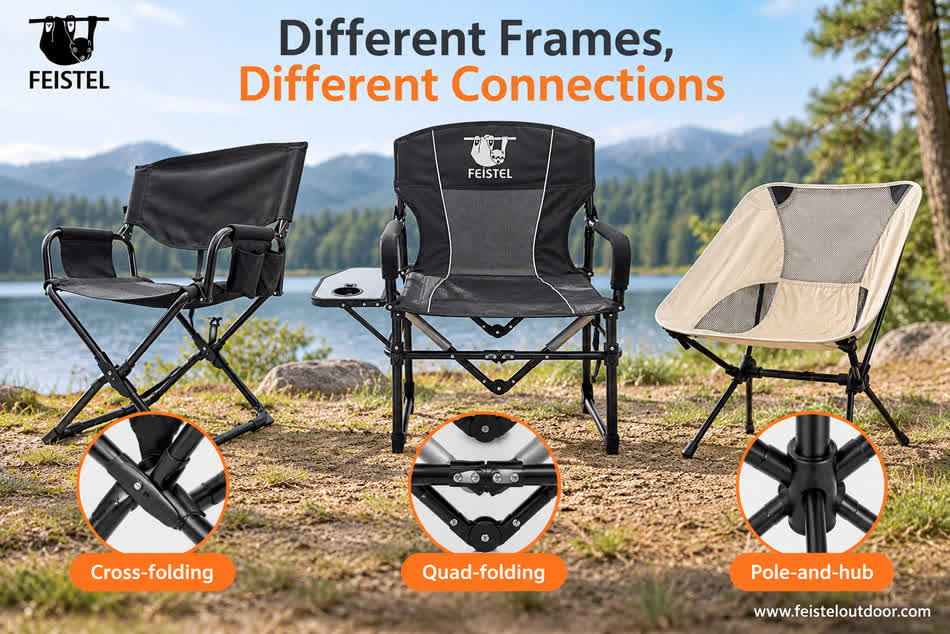
A director-style frame commonly uses crossing members and hinged side structures, with the seat fabric carrying load between supports. Standard camping chairs can use inward-collapsing quad mechanisms or detachable pole-and-hub assemblies. None is automatically stronger simply because of its visual shape. We evaluate the complete load path, joints, fabric attachments and support base, including how the chair behaves after repeated opening and closing.
A chair with additional parts may offer useful accessories or different folding geometry, but more parts also create more interfaces to inspect. When evaluating an OEM design, we recommend documenting pivot locations, tolerances, alignment requirements and any locking features. A smooth-opening display sample is useful, yet it does not by itself verify long-term fatigue performance.
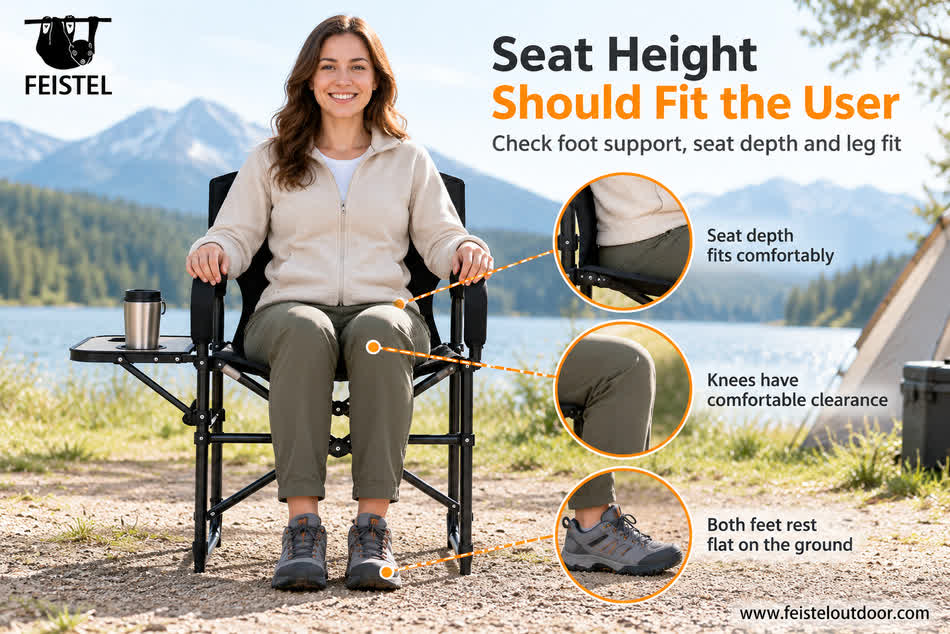
Seat height changes how far the body travels when a user sits down or stands up. An appropriately higher seat may be convenient for repeated transitions, but a seat that is too high can leave the feet unsupported. We therefore ask for loaded seat height, seat depth, user stature and the presence of a suitable footrest. We never describe higher seating as universally therapeutic or suitable for every older user.
Our side-table director chair publishes a 45 cm seat height, making it a practical upright-seating reference rather than a very tall production chair. Its open dimensions and the user’s leg length still matter. If a wholesale buyer requests a tall variation, seat height should be engineered alongside base geometry, step access and appropriate use instructions.
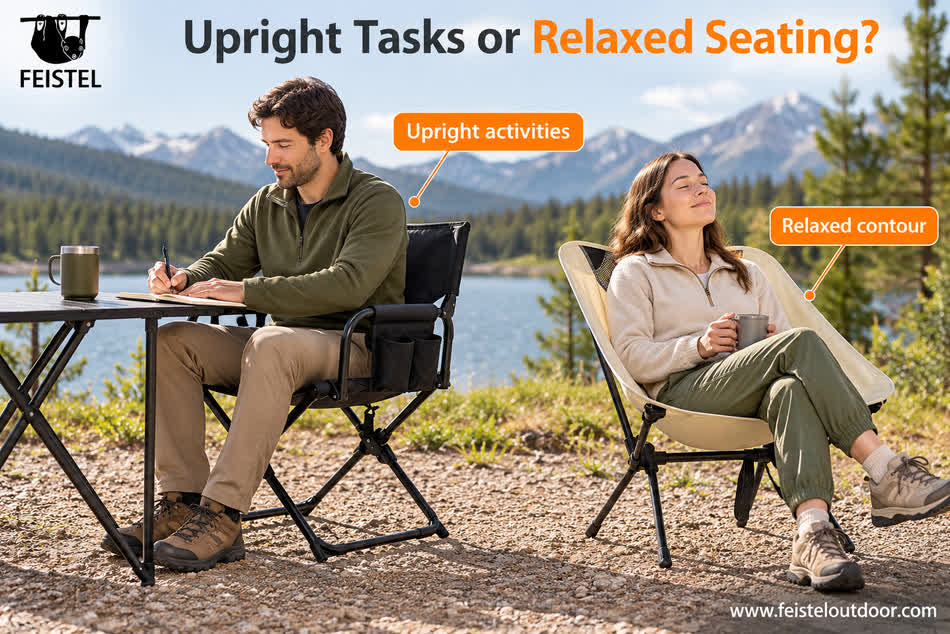
Many director chairs provide a relatively defined, upright fabric seat. A regular sling chair may wrap farther around the body and allow greater fabric sag. Some shoppers prefer an upright sitting position for meals, observation and equipment handling; others prefer a more relaxed contour for resting. Neither preference is universal, and firmness is not the same as measured ergonomic performance.
In product development we relate the seat angle, back-panel height, fabric tension and armrest location to the intended task. A chair for a market stall and a chair for reading beside a campsite can legitimately use different geometry. Sample sitting trials can reveal preferences, but marketing claims based on customer feedback should include genuine documented evidence rather than an invented FEISTEL survey.
A director chair often has a separate upright fabric back panel, whereas regular camping chairs can have low backs, tall padded backs, moon-shaped support or reclining frames. More backrest height does not automatically mean more comfort; angle, contour and head support matter. For stationary relaxation, some buyers may prefer a dedicated high-back model over a conventional director configuration.
FEISTEL offers high-back alternatives within the same camping-chair category. We recommend presenting these as genuine alternatives instead of marketing a moon chair as a director chair. Accurate product classification protects both search relevance and the credibility of technical descriptions.
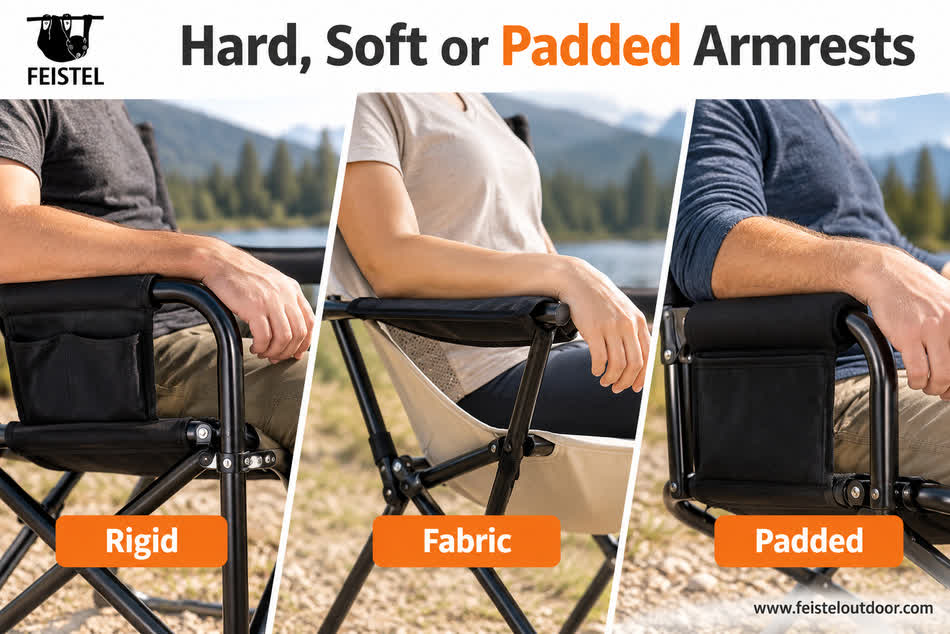
Many director-style chairs incorporate comparatively firm armrests; some standard camping chairs use suspended fabric arms, and others use padded or rigid components. The position and shape influence forearm support and ease of access. We caution against telling users to lift their full body weight by the armrests unless that maneuver is explicitly permitted by the product design and instructions.
Our published metal-frame director chair specifically lists hard armrests and a polyester-mesh cover. That is a useful distinguishing feature for comparison, but the listing does not by itself establish any medical or transfer-assistance benefit. Buyers should evaluate armrest geometry together with seat height and ground stability.
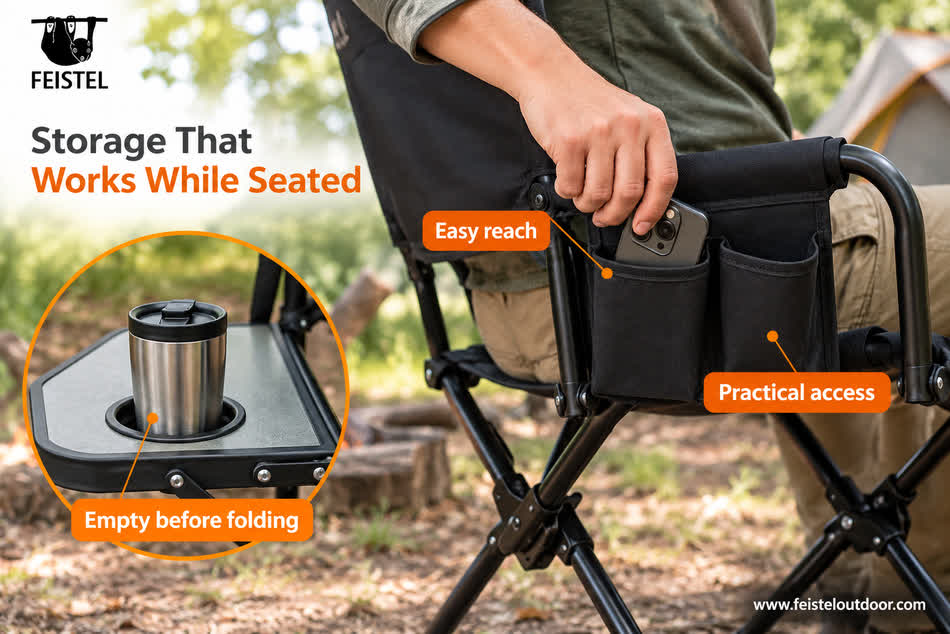
An integrated folding table is a practical reason to select a director-style chair. It may keep drinks, a phone, small accessories or a notebook within reach during fishing, vehicle-based camping or event work. A table does not replace a full dining or equipment table, and the seating capacity cannot be used as its load rating. We recommend confirming tabletop dimensions, locking position, edge clearance and a separately documented safe working load where needed.
Our FEISTEL director chair GW-CC092904 includes a folding side table and storage pouch. The product page lists a 6 kg chair weight, so we position it as a convenience-oriented, vehicle-friendly chair rather than ultralight backpacking equipment. This is a more useful product claim than promising that the table will hold every type of equipment.
Storage arrangements can determine how useful a chair feels during stationary activities. A side pouch can organize small personal belongings, while a cup holder is designed around beverage access. Buyers should check reach distance, accessibility while seated, interference with folding and the consequences of loading one side unevenly. The number of pockets alone is a weak indicator of quality.
For private-label designs, we can discuss pocket position, fabric, stitching and available branding space subject to feasibility. We also recommend checking how bags and contents are removed before folding. An attractive storage feature is only useful when it does not obstruct operation or create an unstable loading pattern.
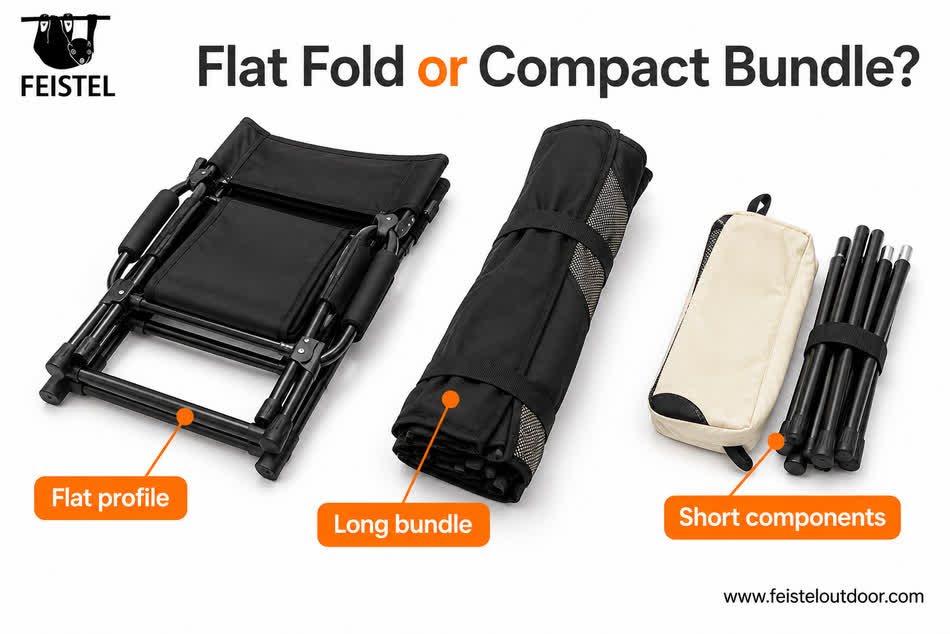
Director-style frames frequently fold into a broad, relatively flat profile, while quad chairs may collapse into long fabric bags and pole-frame chairs may break down into short components. Flat is not equivalent to small: a wide folded chair can be awkward in a narrow backpack. Conversely, a cylindrical bundle may occupy an inconvenient volume in a flat storage compartment.
We ask customers to compare full folded width, depth and length, not a single “compact” claim. For wholesale logistics, master carton dimensions and packing quantity are equally relevant. FEISTEL’s side-table director chair lists approximately 49 × 51 cm folded dimensions; the dimension order and thickness should be confirmed for the exact shipping configuration before making a volume-efficiency claim.
A 6 kg director-style chair and a 0.56 kg compact folding chair answer different transport needs. The larger model carries a side table, storage pouch and full upright framework; the smaller model is aimed at reducing the carried load. The right decision depends on whether the chair is transported ten meters from a car or many kilometers on a trail. We do not equate minimum mass with the best overall value.
In product pages, a published net weight is more useful when paired with a real packed size and carrying method. A shoulder strap, handle or compact bag can change carrying comfort even if two chairs weigh the same. For retail collections, we recommend showing a realistic carrying photograph rather than relying exclusively on studio product shots.
FEISTEL publishes seated-capacity figures for specific products, including 150 kg for its side-table director model and 150 kg for the metal-frame hard-arm director model. These are manufacturer-listed ratings, not a claim that both chairs respond identically to impact, uneven support or side loading. A user leaning on one arm or dropping abruptly into a seat changes the forces through the structure.
For a buyer requiring compliance evidence, we advise asking about the applicable test method, specimen identity, static or cyclic conditions, acceptance criteria and report date. A tube alloy grade alone never certifies the load capacity of the whole chair. In marketing, it is more credible to present a clearly attributed published specification than to invent a dramatic “we tested to failure” story.
Stability is influenced by the support polygon, center of mass, seat movement and ground conditions. A broad director-style frame may look reassuring, but width alone is not proof against tipping. A high seat can alter the relationship between the user’s weight and the chair’s ground supports. On soft sand or loose soil, narrow feet can sink; on smooth surfaces, sliding may be the more relevant issue.
Our recommendation is to judge the full chair in the intended terrain. A foot pad designed to reduce slipping is not necessarily an anti-sink solution. For buyers requesting quantified claims, a documented stability or ground-contact evaluation should specify slope, surface, load and operator position. We do not treat a theoretical engineering explanation as a completed FEISTEL field trial.
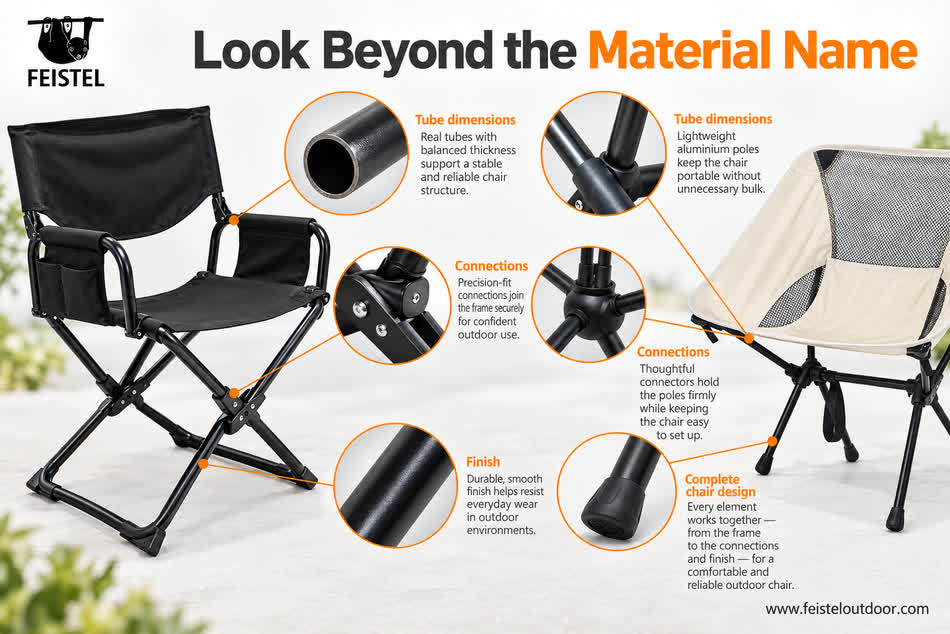
A steel director’s chair can be practical for a full-size, accessory-equipped configuration, while aluminum alloys can be useful for weight-sensitive camping designs. Steel and aluminum differ in density and mechanical behavior, but the final chair weight and strength also depend on tube dimensions, connections, temper, finish and reinforcement. Our catalog includes multiple aluminum alloys and steel-frame configurations rather than one universal material solution.
For beach or humid environments we avoid the statement that aluminum never corrodes or that steel fails after a fixed number of trips. Saltwater can affect exposed hardware and finishes, and joints may trap moisture. The responsible approach is to specify materials precisely, follow product care guidance and request appropriate corrosion-related evidence when a contractual claim requires it.
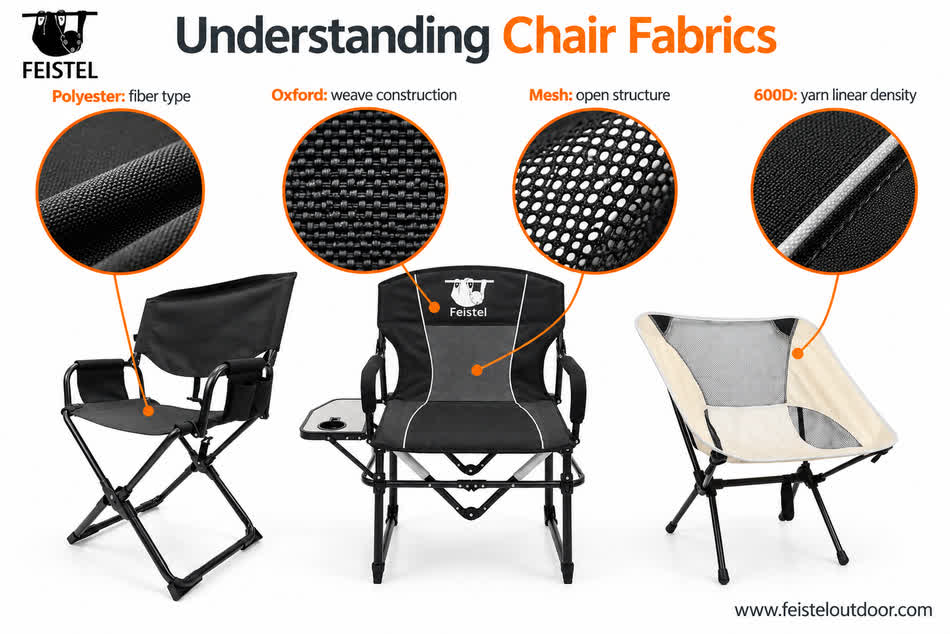
Fabric descriptions are often misread. Polyester names a fiber; Oxford refers to a woven construction; mesh describes an open structure; 600D describes yarn linear density. None of those terms independently proves tear life, seam strength or UV resistance. The actual seat depends on weave, coating, stitching, connection geometry and use.
Our side-table director chair lists 600D Oxford, while our hard-arm director model lists 600D polyester with mesh. The first may appeal to a buyer seeking a woven all-purpose seat; the second explicitly incorporates ventilation zones. We recommend reviewing sample comfort, drying behavior and the material specification rather than claiming every mesh chair is cooler or every Oxford chair is stronger.
A flat-folding chair may feel quick to open, but setup speed depends on the design, operator familiarity and starting condition. We avoid unsupported promises such as “opens in five seconds.” With crossed frames, users should keep fingers clear of pivots and fully engage any prescribed locking system. Portable pole-frame chairs have different connection checks and can require more deliberate assembly.
For commercial sourcing, clear instructions can matter as much as the mechanism itself. We recommend checking for ambiguous steps, missing warnings, abnormal resistance and the way the side table closes. A demonstration video is useful when it shows an actual production configuration and avoids cutting away from critical assembly steps.
For stationary sitting, padding and back support may matter more than minimum weight. A basic director-style chair often offers an upright, tensioned seat, while a padded camping chair may distribute contact differently. Comfort varies among users, and a thick cushion is not automatically superior to a well-shaped unpadded seat. We recommend trials by representative users, accompanied by honest notes about seat depth, support and posture changes.
A retailer can position director chairs for working or eating beside the seat and high-back loungers for rest. That is an application-driven distinction, not a claim that one category eliminates discomfort. We do not turn anonymous online anecdotes into purported FEISTEL customer surveys or fixed comfort scores.
A folding director chair with an attached table occupies more space when open than the seat outline alone suggests. The width of the table, access clearance and proximity of neighboring chairs should be included when planning an RV compartment, market stall or campsite. A compact camping chair may be preferable where users are close together, but even a small chair needs suitable access and ground support.
FEISTEL’s side-table model publishes an open size of 95 × 51 × 83 cm. Buyers should confirm the dimension order and what components are included before using the values in a tight layout. A full-size product template or approved sample is especially helpful for event or retail-space planning.
Outdoor chairs face sunlight, moisture, dirt and repeated transport. We recommend removing debris from folding joints, cleaning materials only as permitted by their care instructions and drying the complete assembly before prolonged storage. Director chairs with tables may have additional pivots and hardware to inspect. None of these practices proves a fixed service life, but they support reasonable product care.
Claims about UV resistance, corrosion protection or years of durability should be tied to actual materials and test documentation. Without those records, FEISTEL can responsibly describe construction choices and recommended care instead of inventing production trials or numerical lifetimes.
For fishing close to a car, we often prioritize upright seating, convenient storage and stable setup; a side-table director design can be an attractive candidate. For longer walks to a fishing location, low carried mass and a compact package may matter more. Terrain is critical in either case: muddy banks, gravel and grass present different support challenges.
For car camping and RV travel, the user can sometimes accept a 6 kg chair in return for an integrated table and a more substantial upright frame. Yet an RV compartment may favor a different folding geometry. We recommend measuring the available storage opening and the usable campsite footprint, not selecting solely by seat comfort photographs.
Director-style seating is associated with event work and film production, but a standard camping director chair is not automatically a specialist elevated production chair. A vendor may value its upright posture and convenient table; a camera or makeup station might require a different height and engineered footrest. We recommend defining the actual workstation, operator movements and venue rules before proposing a chair.
At a sporting event, side-table width and seat height may be limited by venue rules or neighboring spectators. At a trade-show booth, folded storage and branding can become more important. These contexts illustrate why a useful article must compare activities rather than promising that director chairs suit every professional situation.
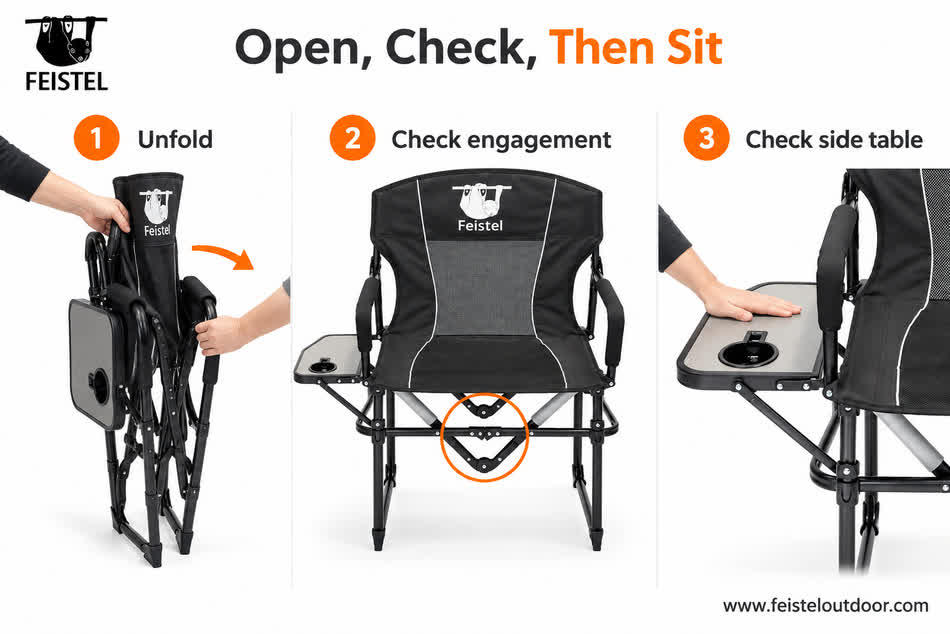
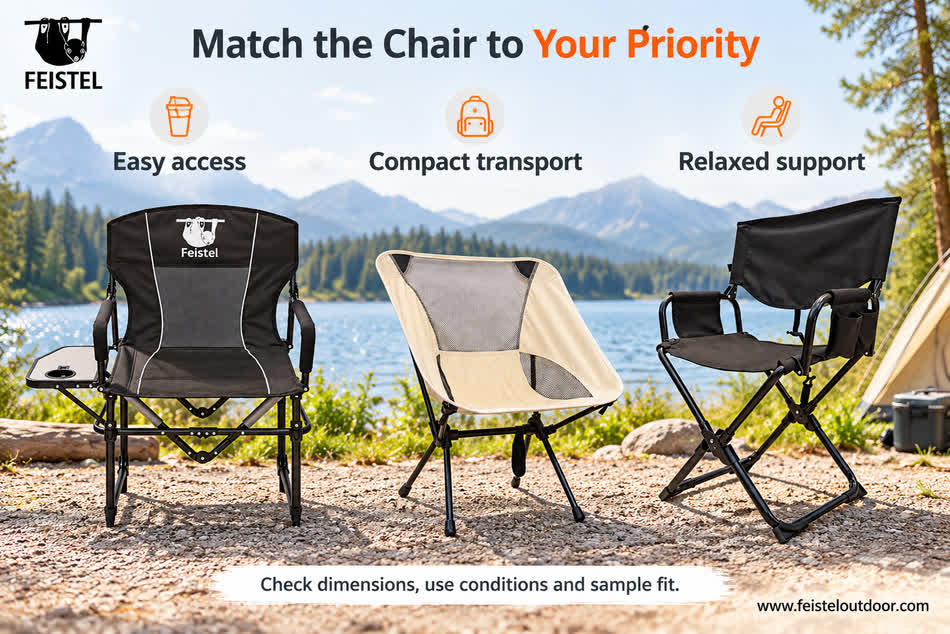
We use a simple decision framework. Choose a director-style chair when a stable upright seat, attached table and convenient small-item storage directly support the task. Choose a lightweight camping chair when transport and packing are dominant. Consider a high-back or padded alternative when relaxed sitting matters more than tabletop access. Check the exact dimensions and approved use conditions before the final decision.
No buyer profile removes the need for sample review. Two users of similar height may prefer different seat tension and angles. A retailer can offer a coordinated assortment rather than one supposedly perfect chair, while a private-label buyer can define the leading use case for each SKU.
Our first reference for director-chair shoppers is FEISTEL GW-CC092904, the steel-frame folding chair with 600D Oxford fabric, side table, storage pouch, 45 cm listed seat height, 6 kg listed weight and 150 kg published seating capacity. We recommend it for consideration in vehicle-oriented and stationary leisure applications—not as an ultralight trekking chair. Side-table load details and current packaging dimensions should be confirmed for project-specific claims.
For buyers who prefer a director-style seat without assuming a side table, our GW-FC092201 metal-frame chair lists hard armrests, 600D polyester and mesh fabric, published dimensions of 58 × 40 × 87 cm and 150 kg seated capacity. We do not describe a side table as standard on this second model because the current product page does not confirm one.
For readers who prioritize relaxed seating over upright geometry, our extra-wide high-back moon chair GW-CC02HW is a different category: 7075 aluminum, polyester and mesh, 68 × 48 × 96 cm and 150 kg listed capacity. We explicitly call it a moon chair rather than a director chair. Accurate style labels help readers and search engines understand why each FEISTEL recommendation is relevant.
Steel frame · 600D Oxford · 45 cm seat height · 6 kg · published 150 kg seat capacity · side table and pouch
Metal frame · 600D polyester and mesh · hard armrests · 58 × 40 × 87 cm · published 150 kg capacity
7075 aluminum · 600D polyester and mesh · 68 × 48 × 96 cm · published 150 kg capacity · NOT a director chair
View official product details →
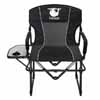
FEISTEL GW-CC092904 • Director Chair with Side Table
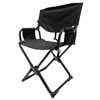
FEISTEL GW-FC092201 • Hard-Arm Director Chair
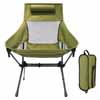
FEISTEL GW-CC02HW • Extra-Wide Moon Camping Chair
Our company profile describes FEISTEL as an outdoor-product manufacturer supporting development, manufacturing and customization for international buyers. For a folding-chair project, we begin by clarifying the application, intended user, seat geometry, frame material, fabric, accessories, packaging and target market requirements. We do not equate customization with a logo change: moving a table or changing a frame tube can affect operation and load paths.
A sensible OEM/ODM process includes technical drawings, approved samples, agreed inspection conditions and clear responsibility for any necessary tests. Availability, MOQ, lead time, compliance documentation and exact modification options depend on the current quotation and project. We recommend reporting verified production or test achievements only when supporting records exist.
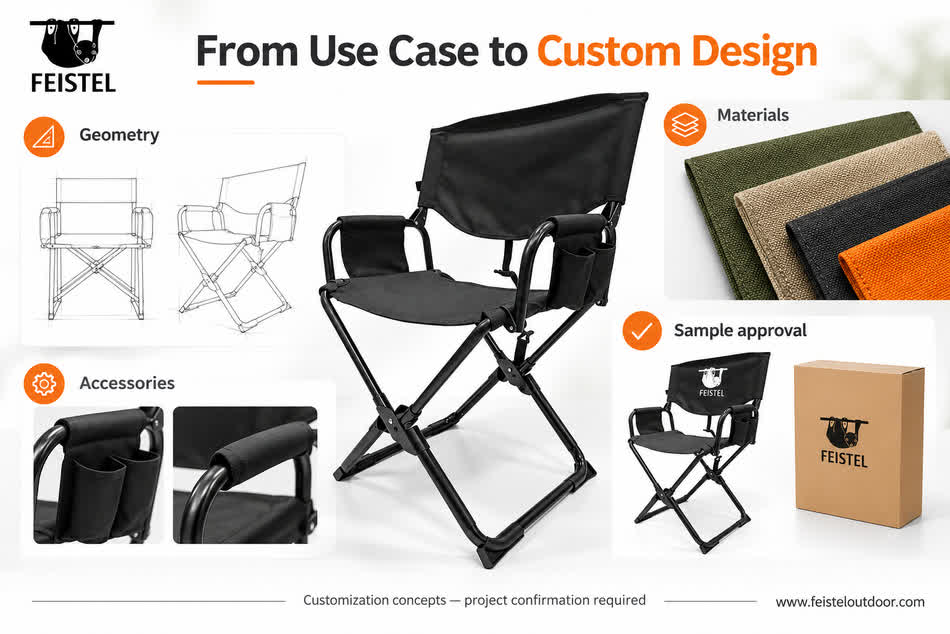
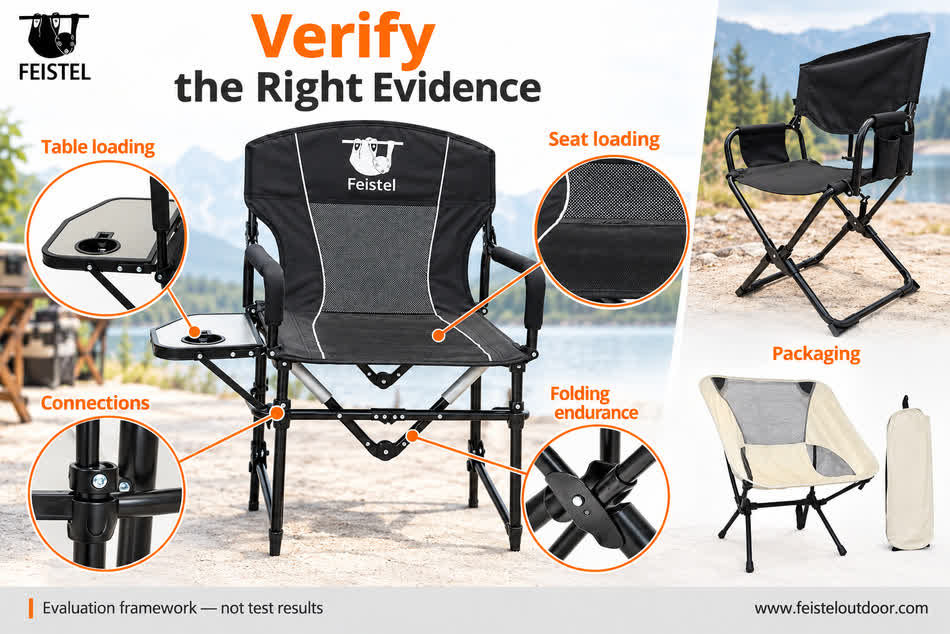
Quality evaluation should consider frame alignment, welds or fasteners where applicable, fabric attachments, opening and closing operation, table support and product packaging. Static seat loading, folding-cycle endurance and side-table loading are different tests. A seat-capacity rating does not validate the table, and a material supplier certificate does not automatically validate the assembled product.
For buyer-facing evidence, we suggest specifying specimen identification, sample count, method, load conditions, cycles, pass criteria and report date. This is an evaluation framework, not a declaration that FEISTEL already performed every possible experiment. We will not transform outside reviewers’ conclusions into first-person factory achievements without primary records.
For an importer, the cheapest unit is not always the best program. Product fit, sample approval, dimensional consistency, carton loading, instruction clarity and destination-market requirements all influence the commercial outcome. A 6 kg folding director chair with a side table has a different logistics profile from a compact pole-frame chair, and the expected customer should justify that difference.
We recommend separating must-have technical features from optional branding and convenience features. This makes quotation comparison clearer and helps avoid adding bulk or cost without an intended customer benefit. Specific pricing, minimum order quantities and delivery commitments should be confirmed in the active FEISTEL quotation rather than copied from unrelated listings.
The most common mistake is treating the two labels as mutually exclusive. A second mistake is assuming that a hard armrest proves easier standing, or that a high back guarantees comfort. Other errors include assuming all director chairs have side tables, every aluminum frame is corrosion-free and a published seat rating applies to attached accessories. Each of these claims needs individual verification.
For FEISTEL content marketing, we also avoid borrowing third-party testimonials, rankings and test statistics as if they were our own factory evidence. A more useful article explains mechanisms, quotes our actual catalog accurately and tells readers what should be checked before buying. The result is less sensational but more trustworthy.
Is a director’s chair a camping chair? It can be. Director’s chair describes the style, while camping chair describes outdoor use. Is a director’s chair better for fishing? It may be when a stationary upright seat and table are useful; a compact model may win for long walks. Does every director chair include a table? No—our two director-style catalog models demonstrate different accessory configurations.
Are director chairs stronger than quad chairs? There is no universal answer; compare the specific assembled chairs and test conditions. Are tall chairs more comfortable? Not for everyone—feet support and seat fit matter. What is FEISTEL’s listed side-table director chair capacity? The official product page publishes 150 kg, which should not be confused with a documented result for every dynamic or terrain condition.
Which chair is best for hiking? Usually start with a compact model and compare true packed size and weight. Is 600D Oxford automatically waterproof? No; fabric coating and testing determine specific water-related performance. Can FEISTEL customize director chairs? Our company provides OEM/ODM services; actual options, quantities and schedules require project confirmation.
Our conclusion at FEISTEL is that a director’s chair is worth choosing when its upright seat, armrests, optional side table and relatively flat folding form directly improve the intended activity. A regular compact camping chair is often preferable when carrying distance, packed mass or flexible seating styles are the priorities. High-back and padded camping chairs provide further alternatives for users focused on relaxation.
We invite importers, distributors, retailers and outdoor brands to compare the FEISTEL models linked below, verify current technical documents and discuss OEM/ODM needs. Rather than presenting one chair as a universal winner, we believe that transparent product specifications, thoughtful fit and suitable quality requirements create better long-term value for customers.
Kategorien
neuer Blog
Stichworte
Marke : ANHUI FEISTEL FACTORY Zugehörige Fertigung : OEM und ODM Produkt : Ein leichter, kleiner, faltbarer Picknicktisch, perfekt für Outdoor-Aktivitäten. Es besteht aus langlebigen Materialien, ist tragbar und einfach einzurichten.
Marke : ANHUI FEISTEL FABRIK Verwandte Fertigung : OEM und ODM Produkt : Der maßgefertigte, leichte, faltbare Moon Chair aus Metalleisen bietet dauerhaften Halt und Komfort, ideal für Camping im Freien, mit einem kompakten, tragbaren Design für einfachen Transport und Lagerung.
Marke : ANHUI FEISTEL FACTORY Zugehörige Fertigung : OEM und ODM Produkt : Tragbarer, zusammenklappbarer, aufrollbarer Picknicktisch für den Außenbereich: Leichtes, robustes Aluminiumdesign mit einstellbarer Höhe, einfacher Einrichtung und kompakter Tragetasche für Camping, Picknicks und Outdoor-Aktivitäten.
Marke : ANHUI FEISTEL FACTORY Zugehörige Fertigung : OEM und ODM Produkt : Ein vielseitiger, tragbarer IGT BBQ-Campingtisch mit höhenverstellbaren Beinen. Ideal zum Kochen im Freien, Camping und Picknicks. Leicht und faltbar für einfachen Transport.
Marke : ANHUI FEISTEL FACTORY Zugehörige Fertigung : OEM und ODM Produkt : Kompakter und leichter Klapptisch aus Aluminium, perfekt für Camping, Strand oder Outdoor-Aktivitäten. Leicht zu tragen, robust und ideal zum Aufbewahren von Speisen und Getränken.
Marke : ANHUI FEISTEL FABRIK Verwandte Fertigung : OEM und ODM Produkt : Dieser faltbare Camping-Liegestuhl aus Holz verfügt über einen stabilen Rahmen, ein ergonomisches Liegedesign und eine kompakte Faltstruktur – perfekt zum Entspannen am Strand, auf dem Campingplatz oder im Garten.
Marke : ANHUI FEISTEL FABRIK Verwandte Fertigung : OEM und ODM Produkt : Dieser klappbare Campingstuhl mit Aluminiumrahmen für den Außenbereich verfügt über eine verstellbare Rückenlehne, ein leichtes und dennoch robustes Design und bietet tragbaren Komfort für Camping, Strandausflüge, Picknicks und Entspannung im Freien.
Marke : ANHUI FEISTELFABRIK Relate Manufacturing : OEM & ODM Produkt : Der Mini-Hocker für Wanderungen und Rucksackreisen kombiniert ein robustes, faltbares Design aus Oxford-Gewebe mit einer cleveren Stiftetasche und bietet so Tragbarkeit, Komfort und Praktikabilität für Campingausflüge und Outdoor-Abenteuer.
Marke : ANHUI FEISTEL FABRIK Verwandte Fertigung : OEM und ODM Produkt : Das Reiseschlafbett aus der Wanderausrüstung für den Großhandel ist ein höhenverstellbares, zusammenklappbares Campingbett, das stabilen Halt, einfache Tragbarkeit und bequeme Ruhe für Outdoor-Abenteuer bietet.
Marke : ANHUI FEISTEL FABRIK Zugehörige Fertigung : OEM und ODM Produkt : Ein ultraleichtes, kompaktes, tragbares und zusammenklappbares Campingbett für den Außenbereich, ideal für Rucksacktouren, mit robustem Rahmen, einfachem Aufbau und einer praktischen Tragetasche für unterwegs.
BLEIBEN WIR IN VERBINDUNG :